



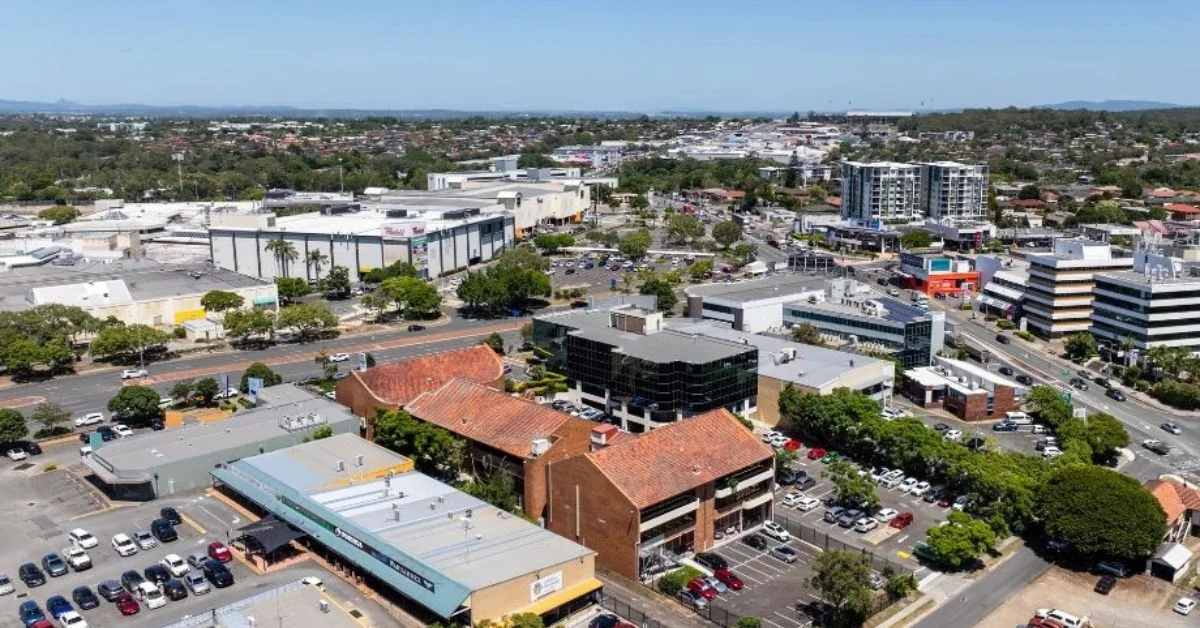
High-Density Zones Approved for Chermside Shopping Centre Precinct

New high-density zones allowing apartment buildings are part of the plan for Chermside Centre Suburban Renewal Precinct. The precinct plan aims to concentrate these zones near established transport infrastructure and established retail and service areas like the Westfield shopping complex.


Chermside already features the Westfield shopping complex, multiple bus routes including the Eastern Busway, and extensive retail and dining options, making it positioned to accommodate additional residential density.

The precinct plan passed with broad support and will now proceed to Queensland authorities for approval before returning to Council for final details including specific rezoning areas and building height limits. Chermside was chosen because of the shopping centre’s location near a planned future Metro line, providing anticipated public transport connectivity for future residents.

Community Perspectives on High-Density Development

Brisbane residents have shared mixed views on the high-density zones proposal for Chermside. Some community members expressed strong support for building apartments near high-frequency public transport, arguing these are exactly the sort of locations that should accommodate denser housing.

Others suggested broader upzoning around all train stations and busway stations across Brisbane, rather than isolated precinct-by-precinct changes. Several residents called for comprehensive transport infrastructure to support high-density corridors, warning against creating pockets of apartments separated by areas with limited public transport options.

Some community feedback emphasized the need to bring back medium-density development options, suggesting that encouraging property owners to consolidate two to six lots at a time could create more housing diversity. The sentiment reflected interest in various density options rather than only high-rise apartments.

Urban Densification Near Shopping and Transport

The precinct plan forms part of Brisbane’s urban densification approach, intended to build taller apartments near public transport to reduce car dependency. Recent changes include reducing minimum block sizes to 120 square metres and cutting parking requirements for new buildings.

Chermside high-density zones
Photo Credit: BBC

Other precinct plans under development include Stones Corner, Wynnum Central, Salisbury, Moorooka and Alderley. Each precinct focuses on areas with existing or planned public transport infrastructure and established commercial centers.

The Chermside high-density zones will complement the shopping centre’s role as a major retail and service hub for Brisbane’s northern suburbs. The precinct serves residents from Chermside, Chermside West, Aspley, Carseldine, Stafford and surrounding areas.

Following approval from Queensland authorities, final details will be determined including exactly which areas receive rezoning and maximum building heights permitted. The timeline for development following final approval will depend on developer interest and market conditions.


Published 15-February-2026.

Have You Had Your Say on the Proposed New Bus Network Yet?

Council is seeking public comment on the proposed new bus network which will see future stages of Brisbane Metro extend the services to Chermside, Carindale, Springwood and the Brisbane Airport, along with other changes to the network.


Brisbane’s bus network is evolving and you are invited to have your say on this proposal.

Council has released Brisbane’s New Bus Network which will introduce two new fully electric, high-capacity Brisbane Metro lines into the network. The two new lines will connect 18 stations along dedicated busways from Eight Mile Plains to Roma Street, and Royal Brisbane and Women’s Hospital to The University of Queensland.

Future stages of this project will see Chermside, Brisbane Airport, Carindale and Springwood added to the serviced areas. Also as part of the changes, there will be three new routes and two routes removed (Routes 145 and P151), and 27 routes redesigned to form just 13 routes. 

The three new routes are the following:

  • Route 26 – Griffith University station to RBWH station
  • Route P109 – Acacia Ridge to City via
  • Route 182 – Upper Mt Gravatt station (Garden City) to Holland Park West via Wishart and Mansfield

These routes will be combined:

  • Route 108 will be combined with Route 105
  • Route 114 will be combined with Route 112
  • Route 117 will be combined with Route 115
  • Route 124 will be combined with Route 125
  • Route 136 will be combined with Route 132
  • Route 174 will be combined with Route 175
  • Routes 181 and 184 will be combined with Route 185
  • Route P129 will be combined with Route 131
  • Route P157 will be combined with Route 156 
  • Route P173 will be combined with Route 172
  • Route P207 will be combined with Route P217
  • Route 376 will be combined with Route 375

The new bus network will improve travel time during peak times on more than half of bus journeys, introduce 160,000 additional trips each year, increase South East Busway capacity by 30.4 million passengers per year in 2031 and free up Cultural Centre Station.

Civic Cabinet Chair for Transport Ryan Murphy said that some 385 buses are jamming up the Cultural Centre station during peak times due to the current over-reliance on direct bus journeys to the CBD. However, this is seen to improve once these routes are combined to create a simplified network and remove routes with “extremely low patronage.”


“The Schrinner Council’s public transport subsidy for Brisbane’s bus services is bigger than all the other Australian capital cities combined,” Cr Murphy said.

“Over the next few years, our investment in this subsidy will increase 84 per cent to $183 million.”

Have your say on the proposed Brisbane’s New Bus Network until 14 December 2022. Click here to answer the survey questions.

Council will finalise the network following public consultation and will seek Translink’s approval on the changes. The new network plan ahead of bus network changes and metro services will be released starting in late 2024.

Brisbane Metro to Eventually Serve Chermside, Carindale, and Springwood

Brisbane Metro could eventually be extended to Chermside, Carindale, and Springwood as part of Brisbane City Council’s integrated public transport solution to meet the city’s long-term transport requirements.

Photo credit: www.brisbane.qld.gov.au

As indicated in the Council’s plans, the new Chermside line would feed into the Royal Brisbane and Women’s Hospital station.

Photo credit: www.brisbane.qld.gov.au

The Carindale line would feed into the Buranda metro station, whilst the Springwood line would be an extension of the Eight Mile Plains busway station.

According to Deputy Mayor Adrian Schrinner, the expanded Brisbane Metro would run along the Eastern Busway and Northern Busway extensions.

Dedicated bus lanes and construction of Brisbane Metro platforms are required for the extensions to be completed.

Updates on the Brisbane Metro


Credit: Brisbane City Council/YouTube

The Brisbane Metro is expected to cost $944 million based on the assessments undertaken as part of the Business Case for the high-frequency public transport system.

In May 2018, the Federal Government confirmed a $300m funding commitment to Brisbane Metro in the 2018-19 Federal Budget and the Council is working closely with the State Government and Federal Government to progress detailed planning for Brisbane Metro.

Photo credit: www.brisbane.qld.gov.au

Planning for the detailed specifications for all aspects of Brisbane Metro’s construction and operation are now underway following the release of the draft Design Report in April 2018.

Subject to approvals, Council expects procurement activities for Brisbane Metro to commence in mid-2018.

Detailed design and construction of Brisbane Metro are planned to commence in 2019, with metro services expected to commence in 2023.

For more information about Brisbane Metro, you can:

  • Call the project team on 1800 692 333 during business hours
  • Call Council on 07 3403 8888 after hours
  • Email the project team at metro@brisbane.qld.gov.au
  • Write to:
    Brisbane Metro
    Brisbane City Council
    GPO Box 1434
    Brisbane Qld 4001