



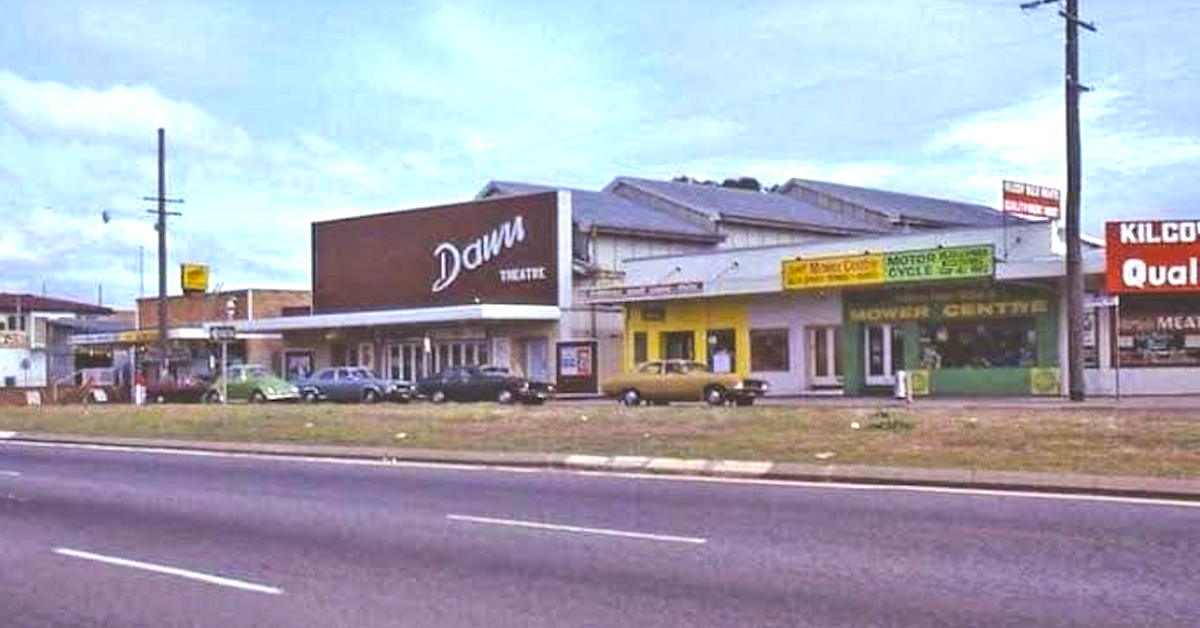
For generations, Chermside residents attended screenings at the Dawn Theatre on Gympie Road. The single-screen cinema operated for nearly eight decades, surviving television, suburban multiplexes and the rise of home entertainment before closing in August 2005.
The theatre has since disappeared from the streetscape, replaced by the Brisbane North Eye Centre. Salvaged materials and architectural references to the former cinema remain in the newer building, while former patrons have continued to recall the theatre and its place in local life.

Silent films marked the beginning of a suburban institution
The cinema opened as Chermside Pictures on 3 November 1928 and was built by Maurice Tilley. Early accounts describe an unconventional theatre with canvas chairs at the rear and wooden garden seats at the front.
Silent black-and-white films were accompanied by live piano music, with a small band later added before sound films arrived around 1930. The venue became known as the Dawn Theatre sometime between 1935 and 1939.

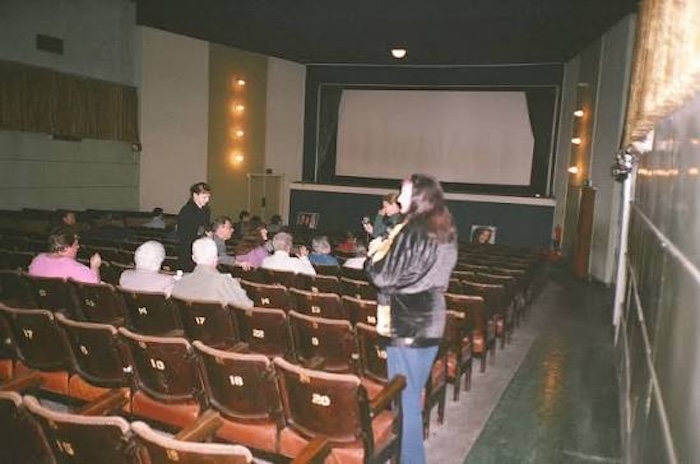
Further improvements were made in the following years. By 1941, a rear gallery with upholstered tip-up seats had been added.

Benefit nights and wartime screenings put the Dawn at the centre of local life
Brisbane City Council heritage material records benefit nights connected with Chermside School, showing the picture theatre also played a role in local fundraising during the district’s early suburban growth. During World War II, the theatre was also used for military-related events and entertainment for residents and service personnel.
Maurice Tilley died in 1942, bringing a change in management. His son, Kenneth Ernest Burton Tilley, returned from military service to manage the theatre, which continued operating through the war and into the postwar period.
A generator, new amenities and a modernised façade kept the cinema operating
Electricity shortages in the late 1940s prompted the installation of a V8-powered generator so screenings could continue. A neighbouring shop was also incorporated into the business and used to sell snacks and refreshments to patrons.


Ownership changed in the early 1950s, with the Fardoulys and Pantges families taking control of the theatre. Further upgrades followed, including renovations, new projection equipment and a modernised façade.
A 1954 report referred to plans for a soundproof “crying room”, designed to allow parents with young children to continue watching a film without disturbing the main auditorium. New amenities and other alterations were also carried out during the period.
Television and multiplexes reshaped Brisbane cinema-going
Television arrived in Queensland in 1959, contributing to the decline of many neighbourhood picture theatres. Later decades brought new competition from multiplex cinemas, video rental stores, DVDs and increasingly sophisticated home entertainment systems.
The Dawn continued operating as independent cinemas disappeared across Brisbane. A multiplex opened at nearby Westfield Chermside in 2000, about 400 metres from the Dawn.
Other surviving single-screen theatres closed or were demolished during the same period. After the Gaythorne Theatre closed in February 2004, the Dawn was reported as Brisbane’s only remaining single-screen cinema.
Michael Fardoulys later said the cinema would have closed earlier had it not been operated as a family business. The comment reflected the extent to which family ownership remained tied to the theatre’s final years.
The final screening came in August 2005
The Dawn screened its final film, Mr & Mrs Smith, on 9 August 2005. The approximately 450-seat cinema closed one day before the property was due to be auctioned.
The theatre and adjoining property were later sold, and the building was demolished. Portions of its pressed-metal ceiling were salvaged, allowing part of the former cinema’s fabric to survive the redevelopment.
The old picture house survives in the architecture of the eye centre
The Brisbane North Eye Centre was subsequently built on the site, with m3architecture drawing directly on the history of the former cinema. The new building’s large street-facing screen was designed to evoke a theatre curtain, while its interiors incorporated theatrical references through lighting, colour and detailing.
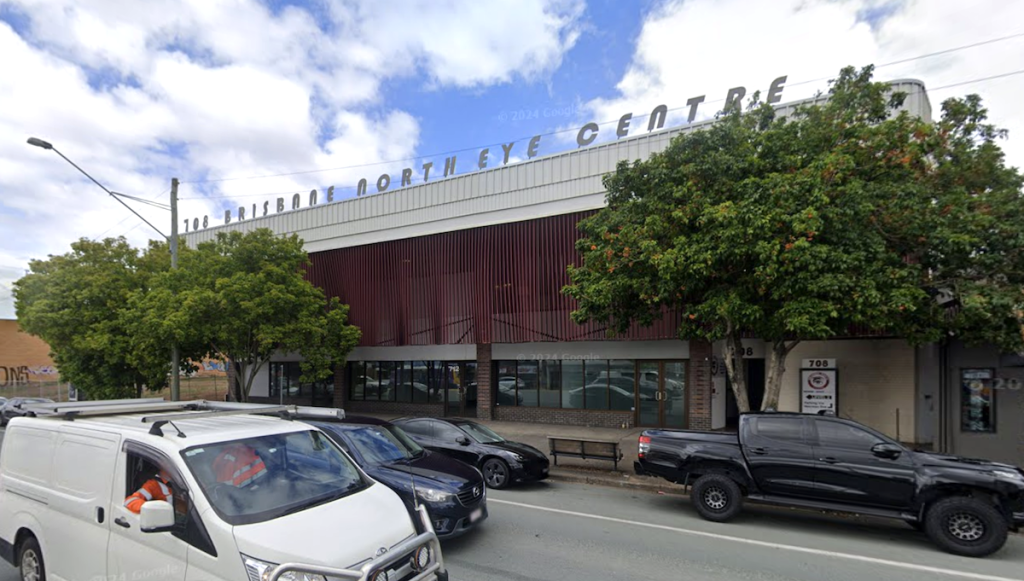
The reception desk was designed with a cinema “candy bar” reference, while pressed-metal ceiling elements recalling the former theatre were incorporated into the development. Other accounts also record that salvaged ceiling material from the Dawn was reused in two rooms.
The design incorporated domestic and postwar visual cues intended to create a more reassuring environment for eye-surgery patients. For decades, the site housed a cinema; it now houses an ophthalmic medical and day-surgery centre.
Architectural references and surviving materials from the Dawn remain at the redeveloped Gympie Road site, preserving a physical link to one of Chermside’s longest-running entertainment venues.
Published 25-Aug-2026