



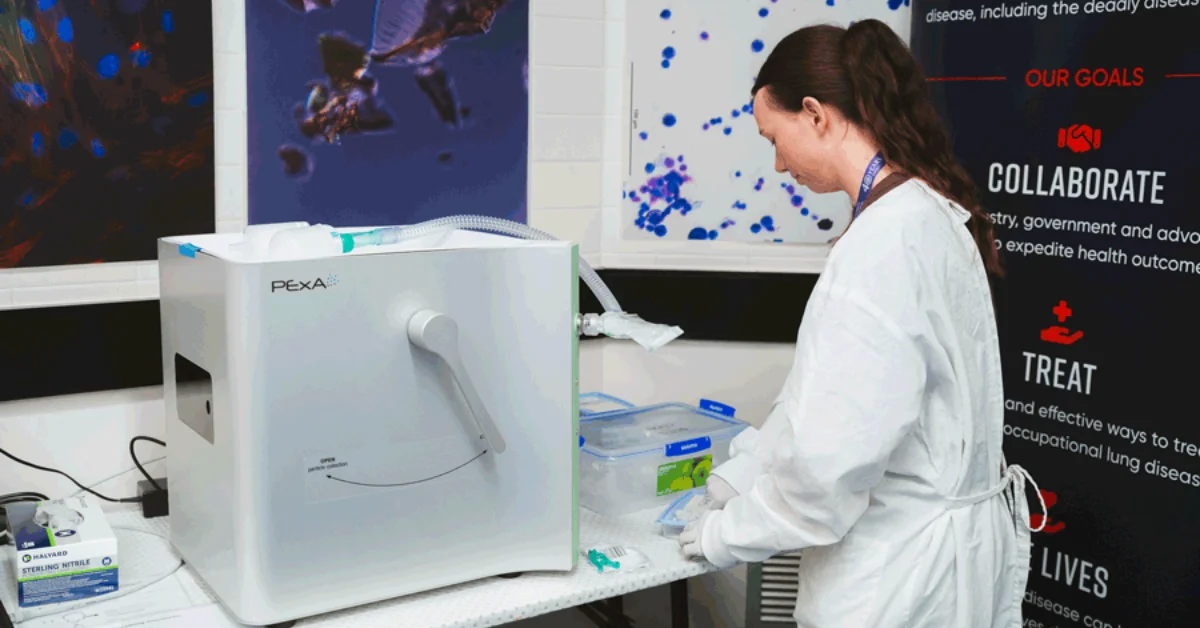
Researchers at The Prince Charles Hospital in Chermside are investigating whether a simple breathing test could help detect silicosis before the disease causes permanent damage to workers’ lungs.
The world-first research is using technology known as PExA, or Particles in Exhaled Air, to collect tiny particles that people naturally breathe out from deep inside their lungs.

Researchers are studying those particles for early signs of silicosis, an incurable lung disease caused by breathing in fine silica dust. The aim is to determine whether changes linked to the disease can be picked up before serious and irreversible lung scarring develops.
Prince Charles Hospital Research Focuses On Earlier Warning Signs
Silicosis is most commonly associated with occupations including construction, mining, tunnelling and stonemasonry.

Silica is found in materials such as soil, sand, natural rock, concrete, tiles and engineered stone. Cutting, drilling or grinding these materials can release fine dust that workers may breathe into their lungs.

Over time, the dust can cause inflammation and scarring. Symptoms can include shortness of breath, a persistent cough, fatigue and chest pain or tightness, while silicosis can also increase the risk of lung infections.
Around 600,000 Australians are believed to be exposed to silica dust at work each year.
One challenge for researchers is finding the disease before permanent damage has occurred. Silicosis is frequently diagnosed only after substantial and irreversible lung scarring has developed.


The Chermside study is examining whether particles collected during a breathing test could provide an earlier warning.
Researchers are comparing the breath samples with blood samples and material collected through a more invasive lung procedure. Samples from people with silicosis are also being compared with those from healthy volunteers as researchers look for differences associated with the disease.
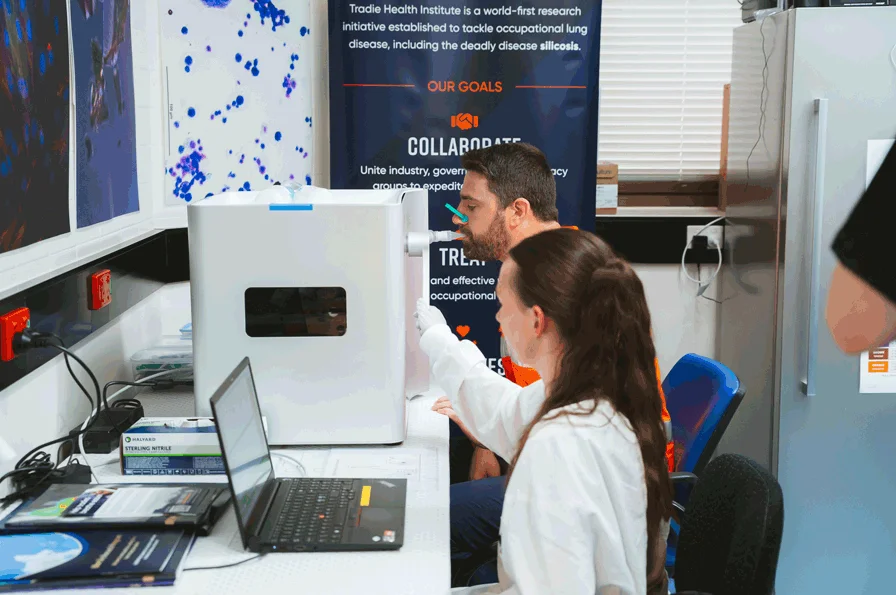
Research Builds On PExA Work Started In 2024
PExA technology was first introduced to Australia in 2024 through research supported by The Prince Charles Hospital Foundation.
Until now, researchers have relied on a machine on loan from Sweden. Industry investment is enabling the purchase of Australia’s first dedicated PExA machine so the research program can continue and expand.
Construction company CPB Contractors has contributed $300,000 over three years towards the next phase of the work.
The research is supported through the Foundation’s Tradie Health Institute, established in 2018 to focus on the health of workers in trade, mining and agriculture.
The wider program also includes research into preventing occupational lung disease, understanding how silicosis develops and investigating possible treatments.
Chermside Team Looks Towards Workplace Testing
Researchers hope the work could eventually lead to a portable form of lung screening that could be taken to high-risk workplaces.
Such a system could potentially allow workers to be monitored before symptoms appear rather than waiting until lung damage becomes more advanced.
The technology is still being investigated and is not yet a routine screening or diagnostic test. Further research and validation will be needed before it could be used in regular clinical care.
Published 13-August-2026